Wild Life

Feel the wondering variety of wild life and bio diversity in this little island

Surfing

Arugam Bay in east cost of Sri lanka is the one of best places in earth for surfing.

White Water Rafting

The small town of Kitulgala in the hill country is the most famous whitewater rafting location in Sri Lanka.

Goldi Sand Beaches

Experience the Miracle Beaches

Cultural Events

Kendy Perahara

Friday, June 22, 2012

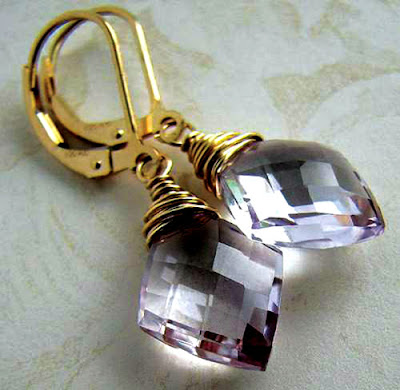
FACETS Sri Lanka 2012 - 22nd International Gem & Jewellery Show

FACETS Sri Lanka 2012, the 22nd International Gem & Jewellery Show will be held from 5th-8th September at the he BMICH Exhibition and Convention Centre in Colombo.
FACETS Sri Lanka, held since 1991, will showcase a wide variety of sapphires and gemstones from producers and wholesalers from all the main producing areas of Sri Lanka.
Organizers say this year exhibitors increased by more than 50 percent and the show will have smart new booths displaying a greater variety of fine gemstones and exquisite Jewellery.
A series of stunning Jewellery fashion shows, pairing fashion with fine Jewellery, will be held daily during the entire duration of the Fair, the organizers announced.
The exhibition will have 154 booths and profile for exhibit includes precious & semiprecious gems, jewellery, lapidary & machinery items, fashion accessories and lifestyle products, gold and silver-plated base metal jewellery, crystal, cubic zirconia, rhinestone jewellery, fashion watches, belts and buckles.
A large number of influential trade visitors from around the world, especially from Russia and China are expected to visit the exhibition.
FACETS 2012 promises better overseas participation and wider cosmopolitan exposure, to both product and company. Steady consistent growth and gradually diversify from the inception, has been the impetus to both seasoned trader and novice to put forth quality, from the Pearl of the Indian Ocean. 


Official Page - Click here

Tuesday, June 19, 2012

Kumana National Park & Birds Sanctuary


Kumana National Park covers an area of about 18, 149 hectare of land. It is located in the south-east part of Sri Lanka. This bird sanctuary is an attraction for bird watchers.  Kumana is contiguous with Yala National Park. Kumana was formerly known as Yala East National Park, but changed to its present name in 5 September 2006.  The park was reopened in March 2003 after it was closed since 1985 due to Civil War in Sri Lanka.
There is a swamp lake of about 200 hectare known as Kumana Villu in Kumana National Park. During the months of May and June numerous species of water birds nest around the swampy area.
At Kumana National Park, birds like herons, egrets, white ibis, spoonbills, painted storks and pelicans can be easily spotted in Kumana National Park. Very rare species of black necked storks, great thick knee, Eurasian spoonbill etc are also found in this national park of Sri Lanka. The fauna of Kumana National Park is mainly of mangrove variety. Kumbuk trees and karan fern trees also grow in this region.
In Kumana National Park different varieties of animals like wild boar, elephant, European otter, golden jackal and fishing cat are found. Indian black turtle, flap shelled turtle, mugger crocodile can be also seen here.

Physical features

Kumbukkan Oya forms the southern boundary of the national park. Some 20 lagoons and tanks support the extensive birdlife of the national park. The lagoons are shallow with depths less than 2 metres (6.6 ft). Kumana villu is subject to occasional inundation with seawater. The elevation of the area ranges from sea level to 90 metres (300 ft). The mean annual temperature is 27.30 °C (81.14 °F) and the area receives 1,300 millimetres (51.18 in) of annual rainfall.

Flora

The park's wetland areas are surrounded by dry zone tropical thorn forest. The inland forest's flora is dominated by Manilkara hexandra (Sinhalese "Palu"), Hemicyclea sepieria, Bauhinia racemosa, Cassia fistula ("Ehela"), Chloroxylon swietenia ("Burutha"), and Salvadora persica species. The dominant tree of the Kumana villu is Sonneratia caseolaris, while Typha angustifolia is the dominant reed. Terminalia arjuna trees dominate the riverine forests along the Kumbukkan Oya. The common aquatic plants of the swamp are colourful Ludwigia spp., Nelumbo nucifera, Nymphaea pubescens, Aponogeton spp. and Neptunia oleracea.


Location 


View Larger Map

Source - Click here

Friday, June 15, 2012

Bundala National Park & Bird Sanctuary

Located about fifteen kilometers east of Hambantota Bundala National Park is one of Sri Lanka's foremost destinations for birdwatchers, protecting an important area of coastal wetland famous for its abundant aquatic (and other) birdlife. Bundala was designated a wildlife sanctuary in 1969 and redesignated to a national park on 4 January 1993. In 1991 Bundala became the first wetland to be declared as a Ramsar site in Sri Lanka. In 2005 the national park was designated as a biosphere reserve by UNESCO, the fourth biosphere reserve in Sri Lanka. The national park is situated 245 kilometres (152 mi) southeast of Colombo. The park is also home to significant populations of elephants, Marsh & estuarine crocodiles, turtles & other fauna, including the leopard. Stretching along the coast east of Hambantota, Bundala National Park is ideal for instant gratification: in a four hour jeep ride, we can see elephants, 8ft crocs, giant squirrels & flamingoes. Afternoon safaris in the dry season (December - May) provide visitors with the best chance of seeing the wildlife.


History

The area was declared a wildlife sanctuary on 5 December 1969,and was upgraded to a national park on 4 January 1993 with land area of 6,216 hectares (24.00 sq mi). However the park was regazetted in 2004 and the original park was reduced to 3,698 hectares (14.28 sq mi). In 1991, Bundala became the first site in Sri Lanka to be designated a Ramsar wetland. In 2005, Bundala was declared a Man and Biosphere Reserve by UNESCO. In January 2006, an area adjacent to Bundala covering an area of 3,339.38 hectares (12.8934 sq mi) was declared as the Wilmanna Sanctuary.

Physical features

The area mainly underlain with hornblende-biotite gneiss of the eastern Vijayan series.The low country dry zone climate prevails in the area. The area have an average relative humidity of 80%. The national park contains five shallow, brackish lagoons with salt pans in three. They are Bundala lagoon of 520 hectares (2.0 sq mi), Embilikala lagoon of 430 hectares (1.7 sq mi), Malala lagoon of 650 hectares (2.5 sq mi), Koholankala lagoon of 390 hectares (1.5 sq mi), and Mahalewaya of 260 hectares (1.0 sq mi). The Koholankala and Mahalewaya are almost totally developed for salt production. The climatic conditions are tropical monsoonal, with a mean annual temperature of 27 °C (81 °F). Annual rainfall ranges from 900–1,300 millimetres (35–51 in), with dry period persists from May to September.The elevation of the park ranges from sea level to 10 metres (33 ft).The park was affected by 2004 Indian Ocean tsunami. Due to protection from sand dunes the park received very little damage.


More Facts - Click here

Wednesday, June 13, 2012

Hot Air Balloon rides in Sri Lanka

Taking a balloon flight over the countryside will leave you in awe. Sunrise and sunset balloon flights are the most breathtaking of all, where you will see the light change and the whole landscape take on a completely different aura.

Share this experience with a loved one for a truly romantic time, celebrating an anniversary or birthday with champagne and make it an experience you will never forget. Treat family or friends or treat yourself to an indulgent balloon flight over your local countryside spotting sights of nature that are normally hidden from view.

Hot air ballooning in Sri Lanka has enjoyed increasing popularity over recent years, but techniques have changed slightly since the first adventurers braved the elements and scaled the heights.

With today's busy lifestyle, hot air ballooning is a past time that can truly take you away from it all. There are many enthusiasts the world over that partake in hot air ballooning events and to watch one of these events, with their many colourful balloons, is truly a magnificent sight, like no other.

Imagine floating in air, feeling completely weightless and gliding through the atmosphere putting all your cares into perspective. With barely a wisp of a breeze to touch your skin, balloon rides are one way of finding yourself at one with nature and seeing the world from a bird's eye view.

Balloon rides in Sri Lanka are becoming more popular and with our private launch sites within the Cultural Triangle of Sri Lanka - Kandalama, Sigiriya, Dambulla; The FORT - Galle; Sinhalese Kingdom of Ruhuna –Tissamaharama; Buttala/Yala: The Sugar and Safari Village as the Sri Lankan country side is often referred to, we offer the most sensational flyover experience.

Source & more info -   Click Here


Tuesday, June 12, 2012

Worlds End Lodge - Lower Ohiya

worlds end lodge Is a tranquil oasis virtually on the roof of Sri Lanka, totally isolated from the everyday world !  A four hour drive from Colombo, you arrive at your destination !

A place to rest and be refreshed.  The swimming pool set against  an incredible landscape with mountain fresh spring water.  For the energetic a trek along spectacular scenery through jungle paths,  Tea Estates, and a gap called "Devil's Staircase" will get you to Horton Plains, Sri Lanka's highest plateau, home to a variety of rare Fauna and Flora.  A short trek or drive will get you to Babarakanda falls, Sri Lanka's highest water fall at 790 ft.  This breath-taking cascade is a sight to behold.  Diyaluma, Dunhinda, Ravana Falls, and the hill country resort towns of Nuwara-Eliya, Bandarawela and Hakgala Gardens,  are a few hours drive.  Kataragama, Yala and Uda-Walawe National Parks are only a day trip.

Comfortable and spacious bedrooms located to give a bird's eye view of Southern Sri Lanka. On a clear day you can view the  Sinharaja forest in Deniyaya mountain range to the placid waters of Uda Walawe; From Dondra light house in Matara to Great and Little Basses, situated off the coast in Hambantota District.

The cry of the soaring mountain eagle; The kaleidoscopic view of the sprawling country side below;  rising mist covering the green rolling hills will be nostalgic memories you will love to cherish, long after your visit.


Saturday, June 9, 2012

Bomburu Ella Falls - Welimada

Bomburu Ella, also known as Perawella Falls, is a waterfall at Uva-Paranagama Divisional Secretariat of Sri Lanka. It is located near the border of Nuwara Eliya and Badulla districts, approximately 15 km from Welimada town. Bomburu Ella is the widest waterfall in Sri Lanka and consists of several small waterfalls grouped together. The source of the falls is a lake located in the central highlands of Sri Lanka.

You can visit Bomburu waterfall and visit potatoes lands and vegetable lands in Welimada. Bomburu Ella is not at closed to main road. It is situated at long distance from main road and you have to go on a foot to Bomburu waterfall. This waterfall is situated at between and border of Nuwaraeliya and Badulla districts. There is a valley at Nuwaraeliya district and water comes to falls.


View of the area


Thursday, June 7, 2012

Eco Village Holiday Resort - Kamburupitiya


The Eco Village Holiday Resort in Kamburupitiya is a one of best known Eco resort hotel in Kamburupitiya, Matara down south of Sri Lanka.

Surrounding the beautiful Lenabatuwa natural lake and Vilpita rain forest the Eco Village Resort is perfect place for anyone for looking for peace and tranquility combined with outstanding Sri Lankan hospitality.

Relaxation on your veranda watching the birds flying in to trees is definitely an unforgettable moment. You can taste Sri Lankan Indian Chinese and Western foods with our staff’s grate hospitality within the covered floating ferry. After having the boat ride and fish hunting you can feel comfortable sleep until hearing the bird’s sounds in morning time.


Location and Settings

Eco Village Resort kamburupitiya is locating 180 km away from the Bandaranaike International Airport takes you through the city centre of Colombo, passing with the sunny beach coastal way Mount Lavinia and the resort towns of Wadduwa, Hikkadduwa, Galle and Matara. In front of the ancient Matara Bodiya you can take Kamburupitiya road which on your left side. 19 km drive through the Kamburupitiya road with in 25 minutes you can reach to the Kamburupitiya small city with passing the Thihagoda junction. Center of the Kamburupitiya junction you can find Gathara road. After come 3 km via the Gathara road you can find the Eco village Resort.

How be at Eco Village.

Nearest train station: Matara, 19 km north.
Nearest bus station: Kamburupitiya Town 2.4 km.
Nearest motorway: Gathara Road adjacent to Hotel.
Nearest city centre: Matara, 19 km south.

Related Posts Plugin for WordPress, Blogger...

 
Google Analytics Alternative